In the face of mounting global environmental challenges and economic uncertainty, Sarawak is taking decisive steps to adopt a circular economy model a system that minimizes waste and maximizes the use of resources. Among the most promising initiatives is the transformation of oil palm waste into biofuel and Sustainable Aviation Fuel (SAF), positioning the state as a future leader in green energy.
Waste Management and Economic Dependency
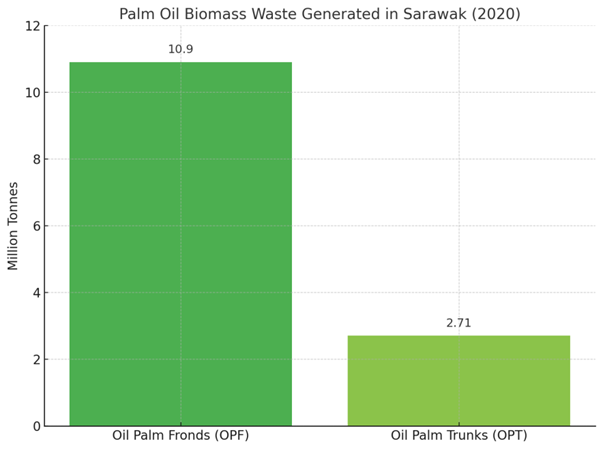
Sarawak, with over 85 palm oil mills, produces significant quantities of palm biomass waste annually often underutilized or discarded. In 2020 alone, the state generated approximately 10.9 million tons of oil palm fronds (OPF) and 2.71 million tons of oil palm trunks (OPT), underscoring the vast potential of this biomass for energy production. Simultaneously, the state has long relied on extractive industries like oil and gas, leaving its economy vulnerable to global tariff impacts and market fluctuations, especially amid increasing geopolitical instability and carbon regulation.
The waste generated from palm oil production, such as palm kernel shells and empty fruit bunches, if unmanaged, contributes to environmental degradation and lost economic opportunities. Without intervention, these by-products could continue to accumulate, posing challenges to land use, emissions control, and rural development.
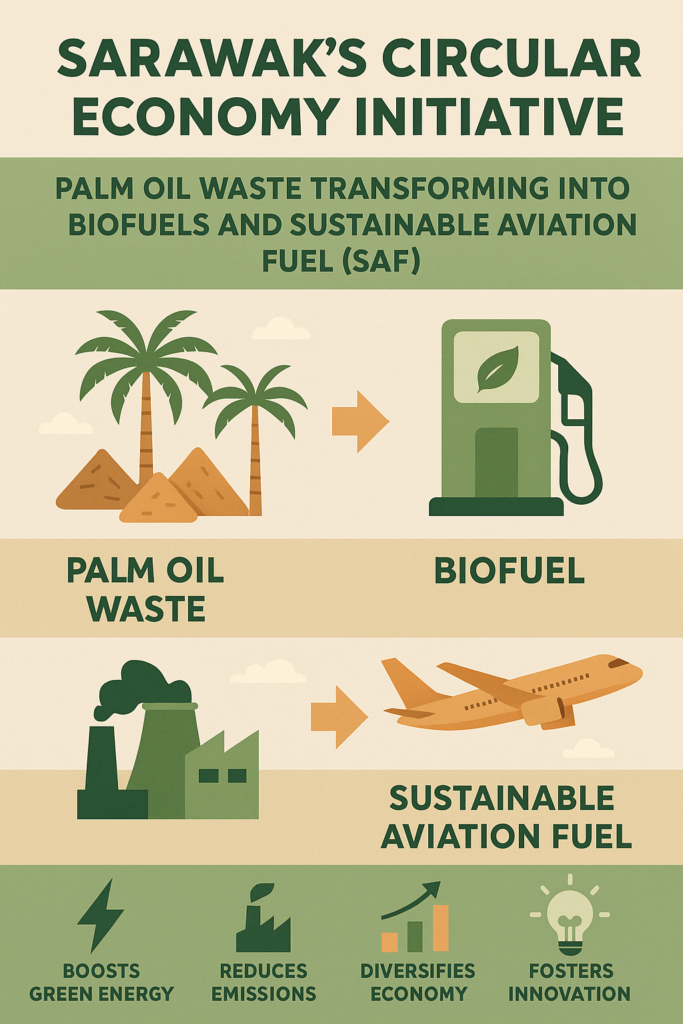
Biofuel and SAF from Palm Waste
Premier of Sarawak, Datuk Patinggi Tan Sri (Dr) Abang Haji Abdul Rahman Zohari bin Tun Datuk Abang Haji Openg, has outlined a visionary solution: converting palm oil waste into biofuel and SAF. This approach not only addresses the waste issue but also aligns with Sarawak’s goal to become a regional hub for green energy exports and a leader in high-value agricultural products.
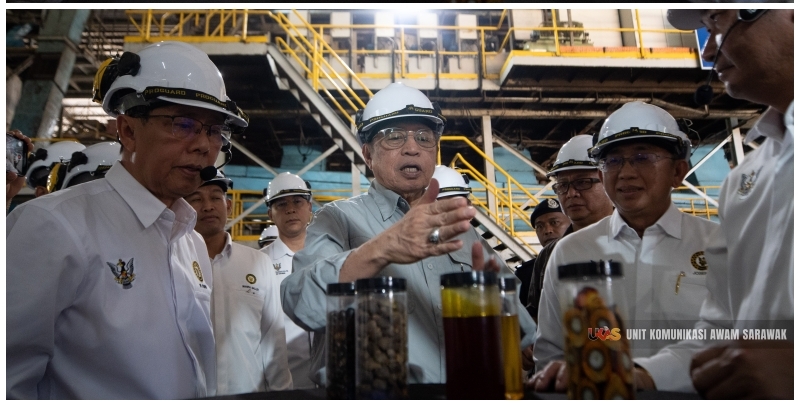
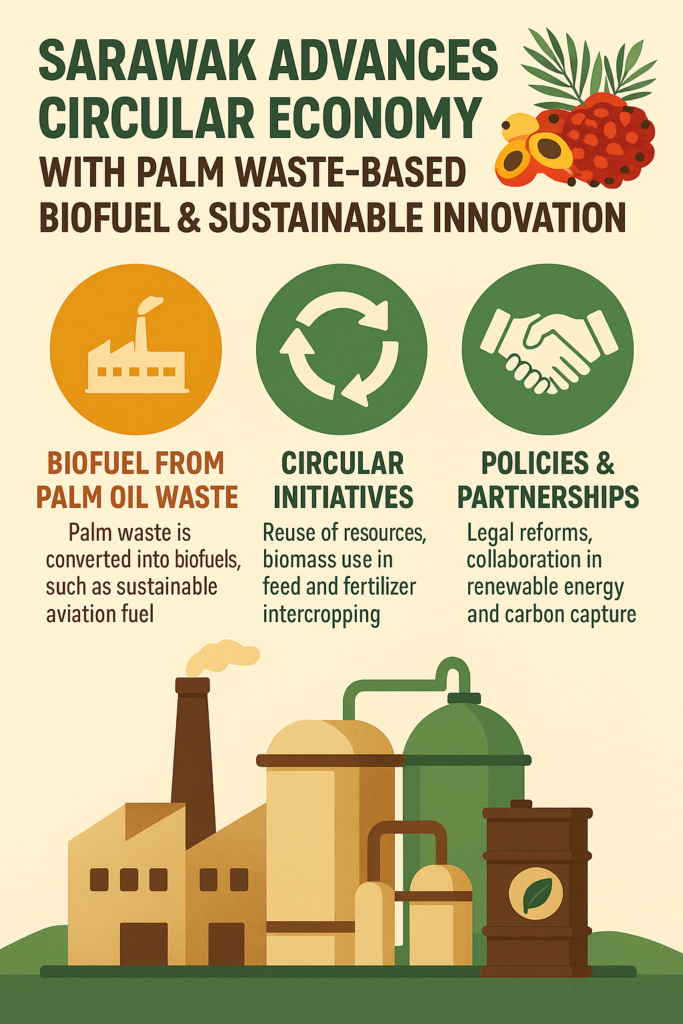
The government is reviewing existing waste management legislation to support the systematic collection and processing of palm oil waste. According to recent announcements, these legal reforms aim to promote downstream activities and increase state revenue by capitalizing on palm biomass conversion technologies. By centralizing these efforts, Sarawak could potentially mass-produce SAF a cleaner alternative to traditional jet fuel and reduce the carbon footprint of global aviation.
The initiative also integrates other circular economy strategies, such as:
– Using palm biomass as animal feed and organic fertilizer.
– Encouraging intercropping with Napier grass for dual revenue streams livestock feed and biomass.
– Incentivizing smallholders and local businesses to participate in this green value chain.
In addition, the Sarawak Land Consolidation and Rehabilitation Authority (SALCRA) has successfully piloted the transformation of palm waste into methane and hydrogen, further demonstrating the technical feasibility and economic potential of renewable fuel production.
Policies, Partnerships, and Platforms
Beyond palm waste, Sarawak is diversifying its renewable energy portfolio through innovations like Ocean Thermal Energy Conversion (OTEC). This technology harnesses temperature differences in ocean water to produce clean electricity and is being studied off the coast of Miri a location with suitable marine geography. If proven viable, OTEC could position Sarawak as a net exporter of renewable power within ASEAN and become a model for ocean-based energy solutions in the tropics.
Internationally, Sarawak has secured strategic partnerships to bolster its sustainability agenda. Notably, a Memorandum of Understanding between Malaysia’s Wireco Sdn Bhd and French firm Blumorpho seeks to export WASTENOT, a food waste management technology, to Europe. This complements Sarawak’s goal of accessing the carbon credit market and promoting circular economy innovations globally.
Moreover, a dialogue in Japan with NEDO (New Energy and Industrial Technology Development Organization) explored collaborative efforts in carbon capture, hydrogen, and ammonia production technologies crucial for Sarawak’s low-carbon transition. A microalgae-based SAF project, supported by NEDO, exemplifies how international cooperation is accelerating sustainable industrial development in the region.
Building a Resilient and inclusive Green Economy
Sarawak’s adoption of circular economy principles is not a trend it is a strategic imperative. As tariffs and climate policies reshape global trade, the state is implementing robust measures to diversify revenue sources, reduce reliance on fossil fuels, and enhance technological sovereignty.
These steps include:
– Establishing a unified data platform to manage state assets efficiently
– Transforming entities like Sarawak Energy Berhad (SEB) and PETROS into innovation-driven revenue generators.
– Launching projects in green methanol and ammonia for the shipping industry.
– Developing new infrastructure such as ports, airports, and digital ecosystems.
The upcoming ICW Borneo 2025, themed “Innovative Construction for a Sustainable Future”, will further strengthen Sarawak’s leadership in sustainable infrastructure across ASEAN. The event will spotlight the integration of solar panels, recycled steel, rainwater harvesting systems, and bamboo materials all rooted in circular economy practices.
Sarawak’s Circular Future Starts Now
Sarawak’s journey towards a circular economy is more than just a response to environmental concerns it’s a strategic blueprint for sustainable development, economic resilience, and global relevance. By transforming agricultural waste into valuable biofuels, investing in cutting-edge renewable technologies like OTEC, and forging international partnerships, the state is not only addressing waste and climate challenges but also opening up new economic frontiers.
The shift from a linear to a circular model ensures that Sarawak can reduce dependency on finite resources, create green jobs, and stimulate innovation led growth. With proactive policies, engaged communities, and visionary leadership, Sarawak is charting a course that other regions can emulate.
In a world where sustainability is no longer optional, Sarawak is proving that it can be profitable, inclusive, and future ready. The circular economy is no longer a concept of the future in Sarawak, it is already underway.
Reference
BERNAMA. (2025). ICW Borneo 2025 Jadi Titik Mula Transformasi Pembinaan ASEAN – Premier Sarawak. BERNAMA. https://www.bernama.com/bm/news.php?id=2422289
Burhanuddin, A. (2025, May 24). Sarawak teroka potensi biofuel dan SAF daripada sisa sawit – TVS. TVS. https://www.tvsarawak.my/2025/05/24/sarawak-teroka-potensi-biofuel-dan-saf-daripada-sisa-sawit/
Isaac, L. (2025, April 16). Kesan tarif: Sarawak laksana strategi baharu hadapi ketidaktentuan ekonomi global – TVS. TVS. https://www.tvsarawak.my/2025/04/16/kesan-tarif-sarawak-laksana-strategi-baharu-hadapi-ketidaktentuan-ekonomi-global/
News – Laman Web Jabatan Premier Sarawak. (2025). Sarawak.gov.my. https://premierdept.sarawak.gov.my/web/subpage/news_view/18745/UKAS
Sarawak kaji pinda undang-undang pengurusan sisa sawit, rintis pembangunan aktiviti hiliran lebih sistematik: Premier. (2025, May 24). Utusanborneo.com.my.
Sarawak, NEDO Jepun bincang kerjasama tenaga mapan. (2025, February 25). Berita Harian. https://www.bharian.com.my/bisnes/lain-lain/2025/02/1365679/sarawak-nedo-jepun-bincang-kerjasama-tenaga-mapan