Exclusive Content:

From Waste to Watts

Transform Sarawak’s rural waste into reliable power, thriving economies, and healthier communities. Our decentralized systems deliver sustainable independence, slash costs, and fulfil the Premier’s vision of resilient villages. Embrace circular prosperity today, power your tomorrow, and lead the renewable revolution.

Mewujudkan Ketenangan Tanpa Kos Tinggi

Ketenangan bukan sesuatu yang boleh dibeli, tetapi dicipta sedikit demi sedikit melalui kesedaran, kasih sayang terhadap diri sendiri dan susun atur ruang yang bijak, yang menjadi inti kepada konsep Seni Bina Ketenangan

Unlocking Green Gold for Rural Communities Through the Bamboo New Economy

Rural Sarawak communities hold the key to bamboo prosperity, your land, knowledge, and labour can generate sustainable income, preserve cultural heritage, and protect our forests. Join the green economy revolution today; your village's future starts with one bamboo shoot.

Understanding Community-based Rehabilitation

Understanding Community-based Rehabilitation

Rehabilitation was initially considered a sophisticated field and service provided by professionals in hospitals or medical institutions that required substantial financial resources at the national level.

It was in the 1970s when the World Health Organisation (WHO) shifted the focus to improving community-level access to rehabilitation. By training local human resources and developing referral systems, persons with disabilities (PWDs) were able to be move involved in social and economic activities.

Soon, rehabilitation was seen as part of primary health care, and in 1978, the Declaration of Alma-Ata led to the initiation of community-based rehabilitation (CBR), in which rehabilitation in settings where resources are limited can begin in the community instead of only in medical facilities.

Today, CBR has evolved to become a broader, multi-sectoral strategy that strives to integrate PWDs into community development processes to ensure not only the proper rehabilitation service they need, but also the equalisation of opportunities given to them, as well as their inclusion in society.

It is carried out through collaborative efforts among a wide range of stakeholders, from PWDs, their families and communities, to relevant government agencies and non-governmental organisations, especially in health, education, occupational and social services.
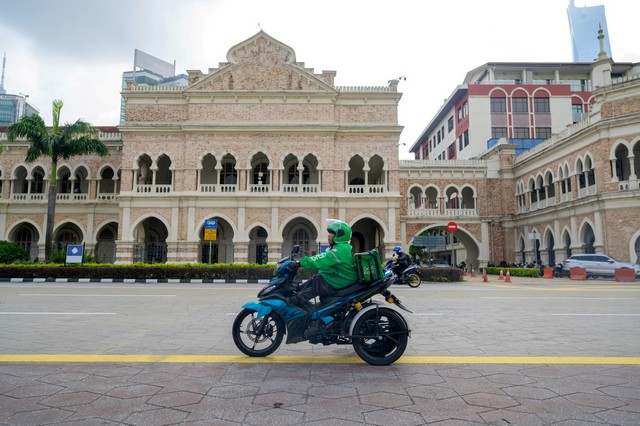
Among many other benefits, CBR can help people with disabilities to be active participants in socio-economic activities. Photo by Grab on Unsplash

Employing a grass-root approach in setting development priorities, it makes full use of local resources and capacity in addition to community assets and structures.

It also frequently bridges gaps in community services, which makes it crucial in countries where rehabilitation are not prioritised and under-resourced.

As the demand for such services around the world is expected to increase due to ageing populations and a rise in chronic illnesses, CBR in particular and rehabilitation in general will be more valuable than ever before in a nation’s healthcare system.

So how does the strategy benefit the targeted focus group themselves? With the right implementation, PWDs will be able to address their impairment, enhance their ability and independence, and promote their participation in socio-economic activities that is on par with everyone else.

They can also be empowered to make more informed decisions, allowing them to achieve their goals, understand their rights, and improve their quality of life alongside their families and caregivers.

For communities, CBR is vital in raising awareness of the diversity around them that includes PWDs. It promotes more positive attitudes towards these individuals, as well as develops a better understanding of the difficulties they face, the rights they have and the significance of economic and social equity so that they are not left behind in any community development activity.

It also directs greater attention on local resources, service networks, and workable solutions to real-world challenges that prevent PWDs and their caregivers from being part of society and obtaining services.

Most importantly, it encourages all individuals, especially those with disabilities, to be engaged in local governance, resource allocation and decision-making.

There are many ways to implement CBR programmes, which often times take account of the local context. In Solomon Islands, for example, the Ministry of Health and Medical Services have been instrumental in leading and coordinating the national CBR programme, which includes training workers on disability rights and support techniques.
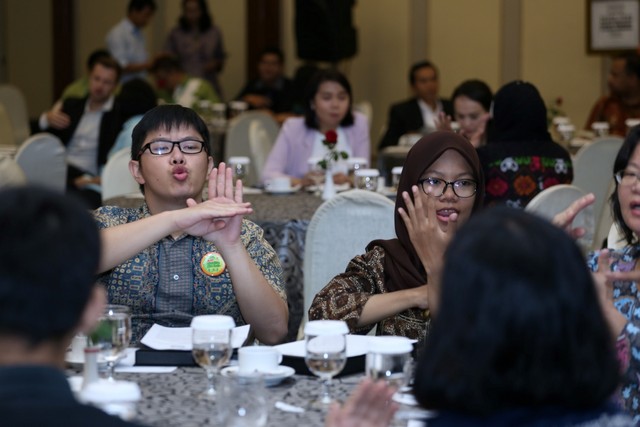
CBR is essential in building more awareness among communities regarding their diversity that includes people with disabilities. Photo by ILO Asia-Pacific @ Flickr

These workers are then located near communities with access to transport, enabling them to provide home-based therapy, education, accessibility improvements and mobility aids.

They also play a significant role in creating awareness of the programme by being part of campaigns organised by health departments, advocating for people with disabilities in the media, and undertaking community awareness activities.

Reference:

Community-based Rehabilitation. (2017). World Health Organization Western Pacific Region. https://iris.who.int/bitstream/handle/10665/279966/WPR-2017-DNH005-factsheet-03-cbr-eng.pdf?sequence=4&isAllowed=y

World Health Organization. (n.d.). Rehabilitation 2030. https://www.who.int/initiatives/rehabilitation-2030

Latest

From Repair to Resilience: Adapting Through Trauma

Trauma can alter brain function through stress responses, but neuroplasticity enables recovery, challenging the belief of permanent damage and highlighting the brain’s resilience, adaptability, and potential for healing after adversity.

Community Mentorship Builds Youth Financial Resilience and Stability

Local mentorship networks in Sarawak and Malaysia equip young people with practical budgeting skills and accountability, reducing bankruptcy rates among vulnerable youth. Evidence shows community-driven guidance transforms financial knowledge into lasting behavioural change and long-term economic stability across all generations.

From Waste to Watts

Transform Sarawak’s rural waste into reliable power, thriving economies, and healthier communities. Our decentralized systems deliver sustainable independence, slash costs, and fulfil the Premier’s vision of resilient villages. Embrace circular prosperity today, power your tomorrow, and lead the renewable revolution.

Grassroots Leadership Tackles Social Challenges

Grassroots leaders in Sarawak drive community resilience through culturally rooted, evidence-informed responses to social challenges, supported by the Premier's vision of empowerment, decentralized governance, and sustainable investment in local capacity for inclusive, lasting development across diverse rural landscapes.

Newsletter

spot_img

Don't miss

From Repair to Resilience: Adapting Through Trauma

Trauma can alter brain function through stress responses, but neuroplasticity enables recovery, challenging the belief of permanent damage and highlighting the brain’s resilience, adaptability, and potential for healing after adversity.

Community Mentorship Builds Youth Financial Resilience and Stability

Local mentorship networks in Sarawak and Malaysia equip young people with practical budgeting skills and accountability, reducing bankruptcy rates among vulnerable youth. Evidence shows community-driven guidance transforms financial knowledge into lasting behavioural change and long-term economic stability across all generations.

From Waste to Watts

Transform Sarawak’s rural waste into reliable power, thriving economies, and healthier communities. Our decentralized systems deliver sustainable independence, slash costs, and fulfil the Premier’s vision of resilient villages. Embrace circular prosperity today, power your tomorrow, and lead the renewable revolution.

Grassroots Leadership Tackles Social Challenges

Grassroots leaders in Sarawak drive community resilience through culturally rooted, evidence-informed responses to social challenges, supported by the Premier's vision of empowerment, decentralized governance, and sustainable investment in local capacity for inclusive, lasting development across diverse rural landscapes.

Hala Tuju Teknologi Hijau Sarawak: Memperkasa Penglibatan Komuniti Luar Bandar dalam Agenda Kelestarian

Masyarakat luar bandar digalakkan merebut peluang teknologi hijau seperti solar, pertanian pintar dan kredit karbon. Inisiatif ini membuka pendapatan baharu, kemahiran moden dan kehidupan lebih sejahtera. Jangan lepaskan kesempatan menjadi agen perubahan kelestarian demi masa depan generasi cerah akan datang.
spot_imgspot_img

From Repair to Resilience: Adapting Through Trauma

Trauma can alter brain function through stress responses, but neuroplasticity enables recovery, challenging the belief of permanent damage and highlighting the brain’s resilience, adaptability, and potential for healing after adversity.

Community Mentorship Builds Youth Financial Resilience and Stability

Local mentorship networks in Sarawak and Malaysia equip young people with practical budgeting skills and accountability, reducing bankruptcy rates among vulnerable youth. Evidence shows community-driven guidance transforms financial knowledge into lasting behavioural change and long-term economic stability across all generations.

From Waste to Watts

Transform Sarawak’s rural waste into reliable power, thriving economies, and healthier communities. Our decentralized systems deliver sustainable independence, slash costs, and fulfil the Premier’s vision of resilient villages. Embrace circular prosperity today, power your tomorrow, and lead the renewable revolution.

LEAVE A REPLY

Please enter your comment!
Please enter your name here