Exclusive Content:

Sarawak Unveils 2027 Welfare Budget

The Sarawak Budget 2027 delivers broad financial support, improving community welfare through targeted cash aid, free education, better healthcare, and rural infrastructure. This strategic plan helps families manage costs while building long-term economic opportunities for all local citizens today.

Women Lead Climate Resilience Through WPS Agenda

ASEAN's Women, Peace and Security agenda recognises women as leaders in climate adaptation and disaster risk management. Yet progress remains uneven. Regional plans are strong, but local women still need money, data and decision-making power to build truly safer communities.

Fair Growth Reaches Everyone, Not Just Cities

Fair development means investing in neglected rural areas so people can access basic roads, water, electricity, jobs, land profits, banking, and digital services. It aims to reduce poverty and narrow the city-village gap, while admitting delays and still unfinished work.

Driving Community Development Through Pua Kumbu

Producing just a piece of pua kumbu is lengthy and intricate. It involves, among other steps, the complicated task of preparing the threads, as well as undergoing a cleansing ritual called ngar to ensure no negativity or bad omen affects the entire process – all of these take place before the weaving itself.

Yet, anthropologist Dr. Welyne Jeffrey Jehom of Universiti Malaya believes that it is this complexity that makes this Iban traditional textile one of a kind.
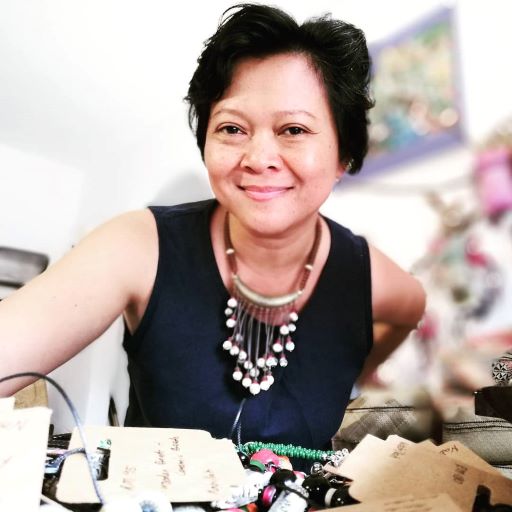
Dr. Welyne Jeffrey Jehom in 2019. Photo from RhGareh Pua Project Facebook page

“It’s very complicated to understand (the process) and that is the kind of complication that we have to face – all the challenge in order to produce this beautiful piece of pua kumbu,” she says during her presentation ‘Traditional Textiles and Costumes’ as part of Spotlight on Sarawak, a series of talks organised by the Heritage of Malaysia Trust between April and July 2022.

She is one of many local and international scholars who has been researching and documenting the art of weaving pua kumbu, as it is deemed a highly significant intangible cultural heritage that needs to be preserved.

However, as she wrote in her 2017 article ‘Memories of textile narratives: Iban weavers restoring pua kumbu knowledge in Sarawak’, merely studying and recording the art “do not guarantee the sustainability of pua kumbu production”.

In her opinion, the community of weavers of both the current and future generations should play their part in safeguarding their culture and heritage because of the knowledge they possess of the textile’s creation, skills and history.

Thus, in 2013, Dr. Welyne embarked on a social entrepreneurship project with the Iban community of Rumah Gare not only to preserve pua kumbu but also to turn the traditional art of pua kumbu weaving into a cottage industry that can elevate the people’s socio-economic well-being.
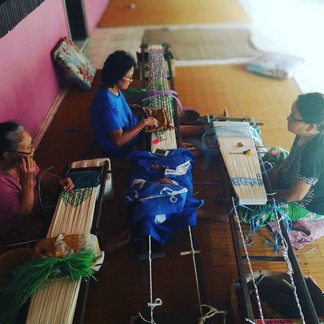
Weavers of Rumah Gare, led by master weaver Bangie anak Embol (centre). Photo from Rh Gareh Pua Project Facebook page

Located along Nanga Kain in Kapit, Rumah Gare is home to master weaver Bangie anak Embol, whose contribution in championing pua kumbu weaving and traditional Iban arts has earned her the recognition of Adiguru Kraf by the Malaysian Government since 2000.

The community project that was launched under the registered trademark ‘Rh. Gareh’ further aims to empower the local community towards development by generating employment for weaving activities, planting of plants for natural dyes, product promotion and distribution, as well as workshops and training for visitors to the longhouse.
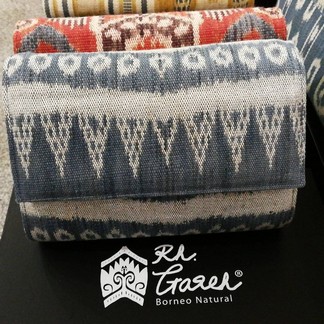
Apart from pua kumbu, the community project at Rumah Gare has diversified to produce pua weaving-based products such as bags. Photo from RhGareh Pua Project Facebook page

Prior to this, the weavers of Rumah Gare, in spite of their unique capability to produce pua kumbu, lacked access to a proper market platform to promote their products; as a result, they received minimal compensations for their valuable knowledge and effort.

Therefore, through the project, Dr. Welyne hopes to address the constraints and identify opportunities for value chain upgrading in pua kumbu production, marketing and distribution.

Moreover, she intends to create an efficient structure to enhance the creation of pua kumbu to a higher quality product, and more importantly conserve the indigenous knowledge and skill of pua kumbu weaving with women weavers for the sustainability of the art’s tradition and production.
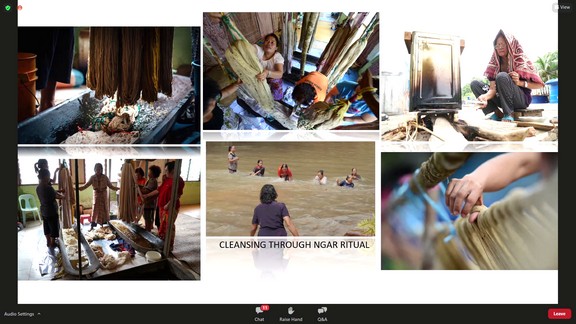
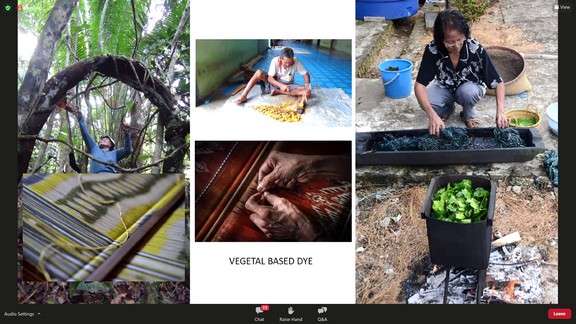
A series of photos depicting the ngar ritual at Rumah Gare. Screenshot from the presentation ‘Traditional Textiles and Costumes’ by Dr. Welyne Jeffrey Jehom
A series of photos depicting the making of natural dye for the pua kumbu at Rumah Gare. Screenshot from the presentation ‘Traditional Textiles and Costumes’ by Dr. Welyne Jeffrey Jehom

Since the implementation of the project, the weavers of Rumah Gare have been able to come up with various products beyond pua kumbu, such as bags, clothes and footwear.

With immense support from the community, the longhouse has also increased the number of weavers to be part of the project.

These include those from the younger generation who have come to realise that they can earn a living from actively practising and ensuring the longevity of the traditional art of weaving pua kumbu.

For more information on the community project, visit https://rhgareh.org and https://www.facebook.com/rhgareh/, as well as feature articles that include Borneo Art Collective and Human Resources Without Borders.

What is Pua Kumbu

A warp-patterned, ceremonial blanket, cloth or textile woven by Iban women on a back-strap loom. However, the term pua kumbu tends to be used to refer to the art of pua weaving, or any item that features the Iban kebat designs and motifs.
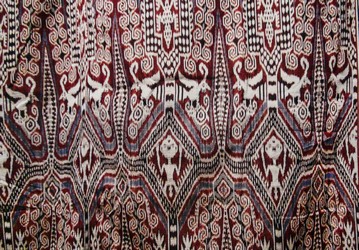
A pua kumbu piece by master weaver Bangie anak Embol, featuring the ‘tiang rianyai’ or ‘Tree of Life’ motif. Photo from the Encyclopedia of Crafts in Asia Pacific Region

In the traditional life of the Iban, pua kumbu is used in ceremonies related to birth, marriage, healing and funeral, as well as in farming rituals. In the past, it was utilised to receive heads from those returning from a victorious war expedition.

Today, the textile serves as a symbol of the Iban’s identity and heritage, and an exceptional material culture of Sarawak.

Sources:
Sarawak Museum Department
Jeffrey Jehom, Welyne. (2017). Memories of textiles narratives: Iban weavers restoring pua kumbu knowledge in Sarawak.

Latest

Sarawak Unveils 2027 Welfare Budget

The Sarawak Budget 2027 delivers broad financial support, improving community welfare through targeted cash aid, free education, better healthcare, and rural infrastructure. This strategic plan helps families manage costs while building long-term economic opportunities for all local citizens today.

A Legacy Worth Weaving, One Thread at a Time

Sarawak's living heritage is at risk as youth grow distant from elders. While government support exists, a community-led model using simple micro-grants and monthly circles can revive traditions. This approach ensures heritage is lived daily, not just archived.

Women Lead Climate Resilience Through WPS Agenda

ASEAN's Women, Peace and Security agenda recognises women as leaders in climate adaptation and disaster risk management. Yet progress remains uneven. Regional plans are strong, but local women still need money, data and decision-making power to build truly safer communities.

Fair Growth Reaches Everyone, Not Just Cities

Fair development means investing in neglected rural areas so people can access basic roads, water, electricity, jobs, land profits, banking, and digital services. It aims to reduce poverty and narrow the city-village gap, while admitting delays and still unfinished work.

Newsletter

spot_img

Don't miss

Sarawak Unveils 2027 Welfare Budget

The Sarawak Budget 2027 delivers broad financial support, improving community welfare through targeted cash aid, free education, better healthcare, and rural infrastructure. This strategic plan helps families manage costs while building long-term economic opportunities for all local citizens today.

A Legacy Worth Weaving, One Thread at a Time

Sarawak's living heritage is at risk as youth grow distant from elders. While government support exists, a community-led model using simple micro-grants and monthly circles can revive traditions. This approach ensures heritage is lived daily, not just archived.

Women Lead Climate Resilience Through WPS Agenda

ASEAN's Women, Peace and Security agenda recognises women as leaders in climate adaptation and disaster risk management. Yet progress remains uneven. Regional plans are strong, but local women still need money, data and decision-making power to build truly safer communities.

Fair Growth Reaches Everyone, Not Just Cities

Fair development means investing in neglected rural areas so people can access basic roads, water, electricity, jobs, land profits, banking, and digital services. It aims to reduce poverty and narrow the city-village gap, while admitting delays and still unfinished work.

Layman Wants Real Answers, Not Viral Delays

Real accountability means complaints trigger binding deadlines, compensation, alerts, and public reports. Until agencies face real penalties and whistleblowers still stay protected, viral outrage will keep replacing ordinary service. The layman wants working systems, not only temporary appeasement after embarrassment.
spot_imgspot_img

Sarawak Unveils 2027 Welfare Budget

The Sarawak Budget 2027 delivers broad financial support, improving community welfare through targeted cash aid, free education, better healthcare, and rural infrastructure. This strategic plan helps families manage costs while building long-term economic opportunities for all local citizens today.

A Legacy Worth Weaving, One Thread at a Time

Sarawak's living heritage is at risk as youth grow distant from elders. While government support exists, a community-led model using simple micro-grants and monthly circles can revive traditions. This approach ensures heritage is lived daily, not just archived.

Women Lead Climate Resilience Through WPS Agenda

ASEAN's Women, Peace and Security agenda recognises women as leaders in climate adaptation and disaster risk management. Yet progress remains uneven. Regional plans are strong, but local women still need money, data and decision-making power to build truly safer communities.

LEAVE A REPLY

Please enter your comment!
Please enter your name here