Producing just a piece of pua kumbu is lengthy and intricate. It involves, among other steps, the complicated task of preparing the threads, as well as undergoing a cleansing ritual called ngar to ensure no negativity or bad omen affects the entire process – all of these take place before the weaving itself.
Yet, anthropologist Dr. Welyne Jeffrey Jehom of Universiti Malaya believes that it is this complexity that makes this Iban traditional textile one of a kind.
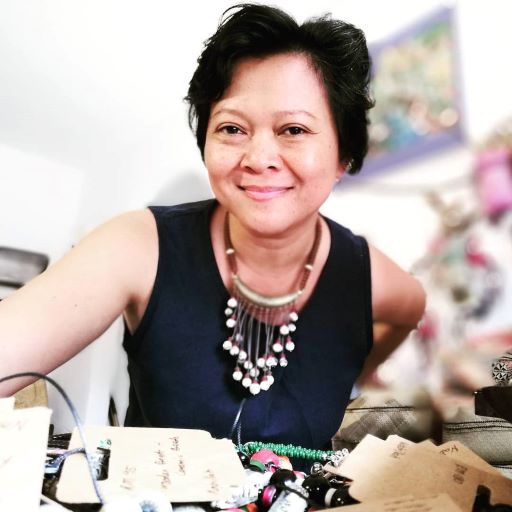
“It’s very complicated to understand (the process) and that is the kind of complication that we have to face – all the challenge in order to produce this beautiful piece of pua kumbu,” she says during her presentation ‘Traditional Textiles and Costumes’ as part of Spotlight on Sarawak, a series of talks organised by the Heritage of Malaysia Trust between April and July 2022.
She is one of many local and international scholars who has been researching and documenting the art of weaving pua kumbu, as it is deemed a highly significant intangible cultural heritage that needs to be preserved.
However, as she wrote in her 2017 article ‘Memories of textile narratives: Iban weavers restoring pua kumbu knowledge in Sarawak’, merely studying and recording the art “do not guarantee the sustainability of pua kumbu production”.
In her opinion, the community of weavers of both the current and future generations should play their part in safeguarding their culture and heritage because of the knowledge they possess of the textile’s creation, skills and history.
Thus, in 2013, Dr. Welyne embarked on a social entrepreneurship project with the Iban community of Rumah Gare not only to preserve pua kumbu but also to turn the traditional art of pua kumbu weaving into a cottage industry that can elevate the people’s socio-economic well-being.
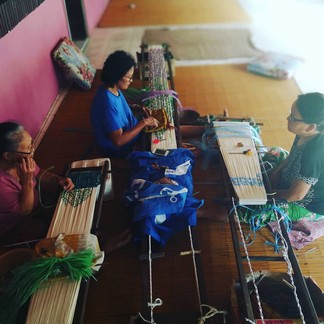
Located along Nanga Kain in Kapit, Rumah Gare is home to master weaver Bangie anak Embol, whose contribution in championing pua kumbu weaving and traditional Iban arts has earned her the recognition of Adiguru Kraf by the Malaysian Government since 2000.
The community project that was launched under the registered trademark ‘Rh. Gareh’ further aims to empower the local community towards development by generating employment for weaving activities, planting of plants for natural dyes, product promotion and distribution, as well as workshops and training for visitors to the longhouse.
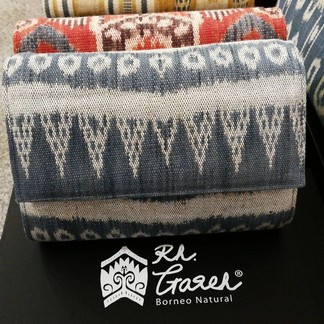
Prior to this, the weavers of Rumah Gare, in spite of their unique capability to produce pua kumbu, lacked access to a proper market platform to promote their products; as a result, they received minimal compensations for their valuable knowledge and effort.
Therefore, through the project, Dr. Welyne hopes to address the constraints and identify opportunities for value chain upgrading in pua kumbu production, marketing and distribution.
Moreover, she intends to create an efficient structure to enhance the creation of pua kumbu to a higher quality product, and more importantly conserve the indigenous knowledge and skill of pua kumbu weaving with women weavers for the sustainability of the art’s tradition and production.
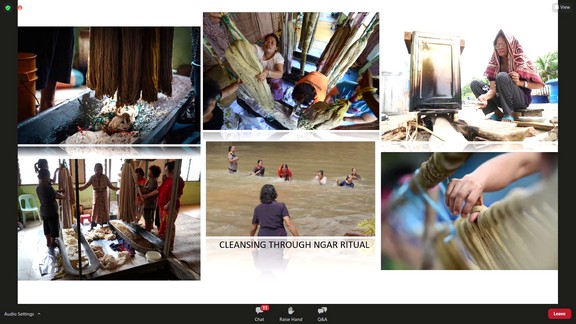
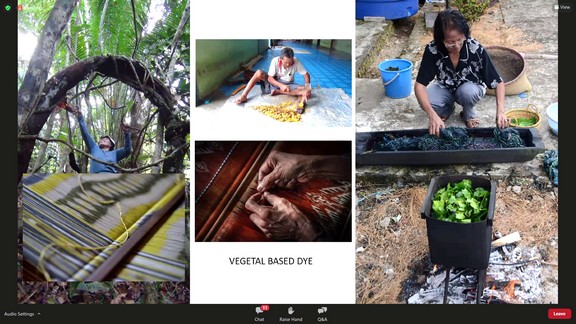
Since the implementation of the project, the weavers of Rumah Gare have been able to come up with various products beyond pua kumbu, such as bags, clothes and footwear.
With immense support from the community, the longhouse has also increased the number of weavers to be part of the project.
These include those from the younger generation who have come to realise that they can earn a living from actively practising and ensuring the longevity of the traditional art of weaving pua kumbu.
For more information on the community project, visit https://rhgareh.org and https://www.facebook.com/rhgareh/, as well as feature articles that include Borneo Art Collective and Human Resources Without Borders.
What is Pua Kumbu
A warp-patterned, ceremonial blanket, cloth or textile woven by Iban women on a back-strap loom. However, the term pua kumbu tends to be used to refer to the art of pua weaving, or any item that features the Iban kebat designs and motifs.
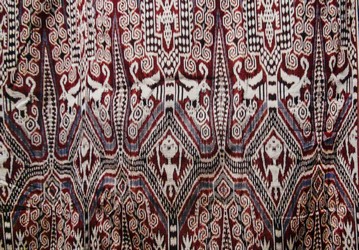
In the traditional life of the Iban, pua kumbu is used in ceremonies related to birth, marriage, healing and funeral, as well as in farming rituals. In the past, it was utilised to receive heads from those returning from a victorious war expedition.
Today, the textile serves as a symbol of the Iban’s identity and heritage, and an exceptional material culture of Sarawak.
Sources:
Sarawak Museum Department
Jeffrey Jehom, Welyne. (2017). Memories of textiles narratives: Iban weavers restoring pua kumbu knowledge in Sarawak.