Inadequate telecommunication coverage negatively impacts rural productivity, education, healthcare, and administrative governance. It hinders rural growth, hinders remote learning, and limits access to telemedicine and virtual consultations. The lack of digital integration weakens governance, slowing project execution and decision-making. To meet the Post-COVID-19 Development Strategy 2030 objectives, Sarawak must invest in inclusive digital infrastructure.
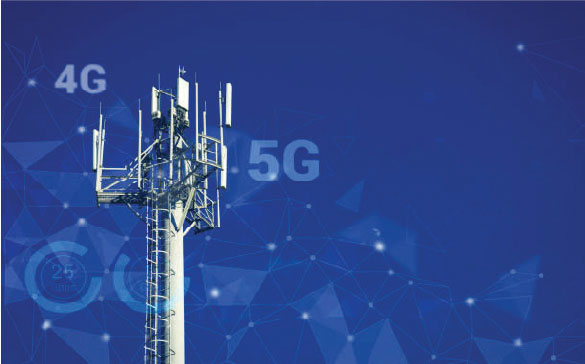
Inadequate telecommunication coverage negatively impacts rural productivity, education, healthcare, and administrative governance. It hinders rural growth, hinders remote learning, and limits access to telemedicine and virtual consultations. The lack of digital integration weakens governance, slowing project execution and decision-making. To meet the Post-COVID-19 Development Strategy 2030 objectives, Sarawak must invest in inclusive digital infrastructure.
SALURAN (Sarawak Linking Urban, Rural and Nation), a collaboration between the state government, federal agencies, and private players, aims to modernise infrastructure and address connectivity issues in Sarawak.
Managed by the Sarawak Multimedia Authority (SMA) and Sarawak Digital Economy Corporation (SDEC), the plan includes building 4,677 SMART towers by 2025, plus another 328 thereafter.
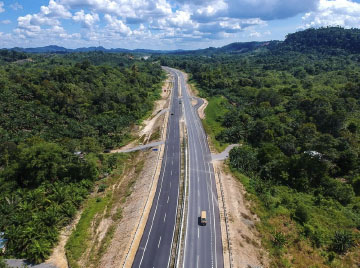
By April 2025, approximately 580 towers had been built, with 458 currently in operation.
Among these, 389 utilise Multi-Operator Core Network (MOCN) systems, allowing different network providers to share infrastructure, a model that speeds up deployment while reducing costs.
Another key SALURAN initiative, MySRBN (Sarawak Rural Broadband Network), employs fixed wireless access to deliver 4G and 5G to rural households.
Since its introduction in 2021, the programme has connected more than 28,000 homes across 217 rural sites.
At the national level, SALURAN is supported by JENDELA (Jalinan Digital Negara), which focuses on upgrading telecommunications and expanding 4G coverage.
By May 2025, Sarawak had received 764 new towers under the programme, 313 of which are already operational.
JENDELA also backs the transition from 3G networks and encourages infrastructure sharing in rural and remote areas.