Adequate housing is a universal right, recognised across numerous international human rights treaties such as the Universal Declaration of Human Rights and the International Covenant on Economic, Social and Cultural Rights.
More than just physical spaces made available for people to take shelter, it is essentially the right for people to live somewhere in “peace, security and dignity”, according to the Office of the High Commissioner for Human Rights (OHCHR) of the United Nations.
For housing to be adequate, it posits, there are several elements that must be met, including accessibility, habitability and affordability (Table 1).
Unfortunately, the financialisation of housing – which happens when housing is being constructed and valued as a commodity rather than a need – over the past decades has made homes less affordable to those who are grappling with the rising cost of living.
In some parts of the world, the phenomenon has even caused evictions or displacements of residents of neighbourhoods located in ‘prime areas’ to make way for speculative real estate investments.
Governments, therefore, are urged to ensure that their housing strategies are designed to ensure that adequate housing remains a human right.
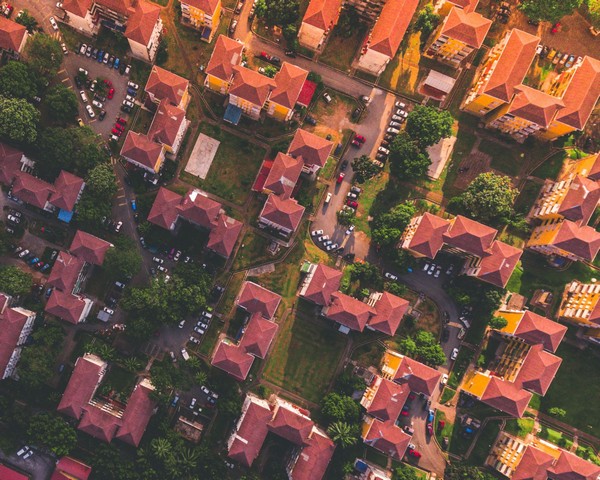
In Malaysia, where 76.9 per cent of its people own a home (as of June 2023), more affordable houses are being built for those from low- to middle-income households. Until the end of 2022, 108,373 of these units have been constructed across the country, on its way to meet the 500,000 target by the end of the 12th Malaysia Plan.
Since the 2020 National Budget, Malaysia has also introduced the Rent-to-Own scheme (RTO) to provide potential homebuyers the option of renting a property for a certain period of time before deciding to purchase it (or not).
Other recent national housing initiatives include the development of an inclusive housing pilot project in major cities to meet the needs of diverse target groups, as well as the exploration of potentially establishing inclusive retirement villages in preparation for the impact of an ageing country.
Enhancing Home Ownership and Affordability in Sarawak
‘Enhancing Home Ownership and Affordability’ is one of the key measures of the 11th strategic thrust – ‘Combating Poverty and Enhancing People’s Well-being’ – under the 2024 State Budget.
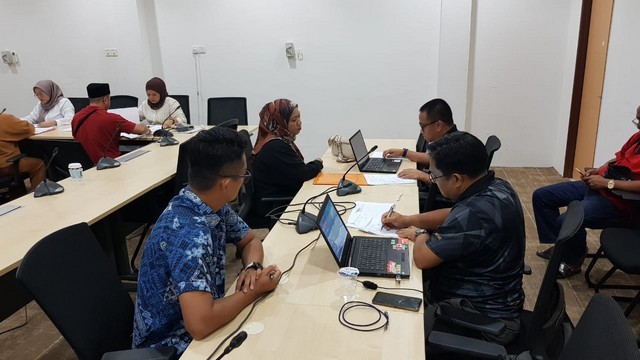
The strategic thrust aims to alleviate poverty through improvements in household income and quality of life, specifically “catalytic initiatives” implemented by various ministries and agencies designed to uplift the socio-economic level of Sarawakians.
The aforementioned measure, which goes hand-in-hand with efforts to provide affordable housing, strives to enable low-income households to have their own home through financial assistances and housing schemes carried out by the Sarawak Government, namely:
- End-financing for Affordable Housing: Disbursed through Mutiara Mortgage and Credit Sdn Bhd (MUTIARA) – a wholly owned subsidiary of Housing Development Corporation (HDC) – to address end-financing challenges affecting homebuyers from low- and middle income groups.
- Housing Deposit and Repayment Assistance Scheme (HDRAS): Introduced in 2021 as Housing Deposit Assistance Scheme (HDAS), it provides financial assistance of RM10,000 to eligible homebuyers from low- to middle-income groups to purchase affordable houses for housing projects sanctioned by the Sarawak Government. Since 2022, HDRAS also offers repayment assistance of RM200 per month for up to 48 months for home buyers that have been approved with 100 per cent loan financing from any financial institution. Currently, the service is available at MUTIARA.
- Longhouse Loan Scheme: Implemented by HDC since 1976, it is a special loan given to natives residing in longhouses for renovation of individual units or for the purpose of building new longhouses (especially in the case of fire). The scheme is presently funded by both the Sarawak and Federal Governments.
- Skim Penempatan Semula (SPS) and Skim Pembesaran Kampung (SPK): Implemented by Jabatan Tanah dan Survei Sarawak, lots for residential purposes are provided under these schemes for eligible low-income individuals who require land to build their own homes.
- Urban Renewal Programme: Carried out through various redevelopment and housing projects to enhance the standard and quality of life of the people by providing affordable housing, well-planned settlements with basic infrastructure, recreational facilities, places of worship and business premises. Among those that are either completed, in progress or upcoming (as of 2023) are the Darul Hana Redevelopment Project; Sungai Bedaun Housing Project; Tabuan Melayu and Tabuan Foochow Redevelopment Project; Jepak Redevelopment Project; Bukit Assek Redevelopment Project; and Kampung Seberang Kedai Lawas Redevelopment Project.
| Element | Description |
| Security of tenure | Housing is not adequate if its occupants do not have a degree of tenure security which guarantees legal protection against forced evictions, harassment and other threats. |
| Availability of services, materials, facilities and infrastructure | Housing is not adequate if its occupants do not have safe drinking water, adequate sanitation, energy for cooking, heating, lighting, food storage or refuse disposal. |
| Affordability | Housing is not adequate if its cost threatens or compromises the occupants’ enjoyment of other human rights. |
| Habitability | Housing is not adequate if it does not guarantee physical safety or provide adequate space, as well as protection against the cold, damp, heat, rain, wind, other threats to health and structural hazards. |
| Accessibility | Housing is not adequate if the specific needs of disadvantaged and marginalised groups are not taken into account. |
| Location | Housing is not adequate if it is cut off from employment opportunities, healthcare services, schools, childcare centres and other social facilities, or if located in polluted or dangerous areas. |
| Cultural adequacy | Housing is not adequate if it does not respect and take into account the expression of cultural identity. |
Table 1: Key elements of the right to adequate housing. (Source: https://www.ohchr.org/en/special-procedures/sr-housing/human-right-adequate-housing)
References:
Manjit, K. (2023, June 11). Govt wants every Malaysian to own a home, says Nga. The Star. https://www.thestar.com.my/news/nation/2023/06/11/govt-wants-every-malaysian-to-own-a-home-says-nga
Mohamed, B. & Qistina, S. (2023, September 11). Malaysia on track to build 500,000 affordable homes by end of 12MP. New Straits Times. https://www.nst.com.my/news/government-public-policy/2023/09/953795/malaysia-track-build-500000-affordable-homes-end-12mp
Office of the High Commissioner for Human Rights. (n.d.). Financialization of housing. https://www.ohchr.org/en/special-procedures/sr-housing/financialization-housing
Office of the High Commissioner for Human Rights. (n.d.). The human right to adequate housing. https://www.ohchr.org/en/special-procedures/sr-housing/human-right-adequate-housing
PropertyGuru Editorial Team. (2023, October 22). Rent-To-Own (RTO) Malaysia: All You Need To Know, And 3 Schemes To Try! https://www.propertyguru.com.my/property-guides/rent-to-own-rto-malaysia-13511
Sarawak Government. State Legislative Assembly (20 November 2023). Second Meeting of the Second Session, Nineteenth Sarawak State Legislative Assembly Debates. (Hansard). https://duns.sarawak.gov.my/web/subpage/webpage_view/118
Sarawak Government. State Legislative Assembly (28 November 2023). Second Meeting of the Second Session, Nineteenth Sarawak State Legislative Assembly Debates. (Hansard). https://duns.sarawak.gov.my/web/subpage/webpage_view/118