In the heartlands of Sarawak’s rural farming communities, a quiet revolution is taking root powered not by tradition, but by innovation.
Through the integration of smart agriculture technologies, projects such as those in Annah Rais, Gedong, and Rempangi are demonstrating that digital tools can be the catalyst for sustainable rural transformation.
The Problem: Traditional Farming’s Growing Challenges
For decades, Sarawak’s rural farmers have depended on manual labour and age-old methods to cultivate their crops. However, traditional agriculture is increasingly challenged by unpredictable weather, labour shortages, low yields, and market volatility.
These issues have discouraged younger generations from entering the sector, further deepening the rural-urban divide and threatening local food security.
The Solution: Smart Farming Powered by IoT

A new wave of innovation is addressing these challenges head-on. At the forefront is the fertigation pilot project in Annah Rais, Padawan, launched by the Mambong State Agriculture Association.
This initiative harnesses the Internet of Things (IoT) to automate irrigation and fertilisation systems, monitor soil and weather conditions, and improve crop quality and yield.
“This is the first IoT-based agriculture project in Mambong, and it’s already showing signs of transforming how our farmers work,” said Mambong assemblyman Datuk Dr Jerip Susil during a site visit.
With a start-up cost of RM50,000 and additional support of RM60,000, the project represents a scalable model for rural agricultural transformation.
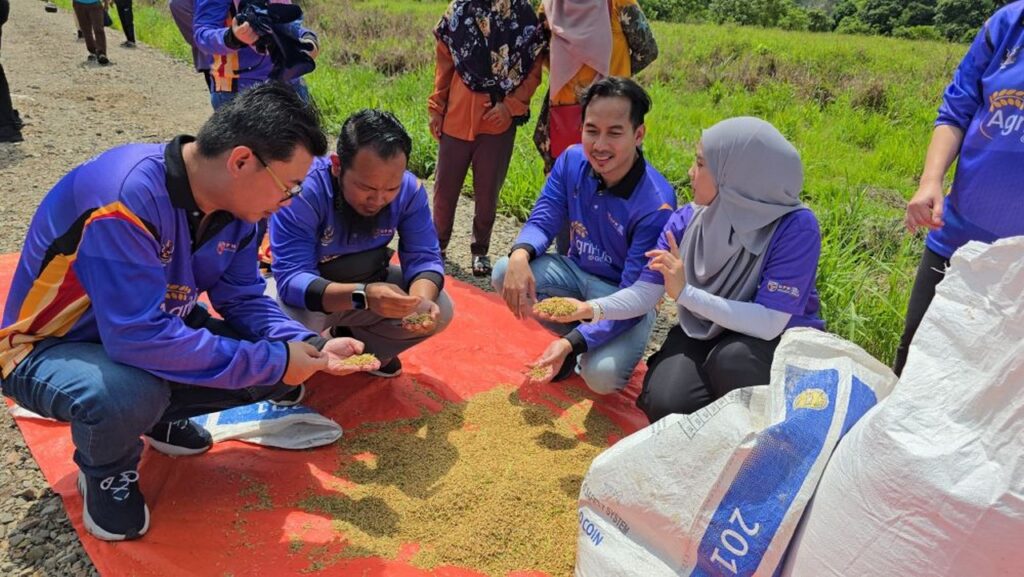
Smart farming isn’t just confined to Padawan. In Gedong, AgriHub@Gedong, spearheaded by Universiti Putra Malaysia Bintulu Campus (UPMKB), integrates mechanised tools like the Kubota Combined Harvester and Rice Transplanter.
The objective: increase rice yield and reduce manual labour. “This project aims to elevate Gedong as a key rice-producing area in Sarawak,” said project lead Professor Dr Shahrul Razid Sarbini.
Similarly, in TKPM Rampangi, farmers like Edison Chang and Yuan Amat manage thousands of plants remotely using mobile apps.
Their greenhouse setup features smart fertigation systems, plant and weather sensors, and real-time CCTV all part of a smart agriculture solution developed by Positive Mind Sdn Bhd with support from the Sarawak Multimedia Authority (SMA) and Department of Agriculture Sarawak.

Evidence of Impact: Efficiency, Youth Participation, and Better Yields
Across all pilot sites, early results are encouraging. In Annah Rais, the smart fertigation system is expected to yield crops within six weeks significantly faster than conventional methods.
In Rampangi, digital farmers are reporting higher productivity, improved crop quality, and substantial savings in water, fertiliser, and labour.
Furthermore, these technologies are making agriculture attractive to younger generations. “We’ve seen more youth showing interest, especially when they realise they can manage farms remotely and still pursue other activities,” said Noresa Donald Matu, Project Manager at TKPM Rampangi. The Agriculture Institute Sarawak (IPS) is also stepping up efforts to train digital-savvy agropreneurs, with over 2,000 graduates to date.
Dato Sri Dr Stephen Rundi Utom, Minister for Food Industry, Commodity and Regional Development, affirms this shift: “The integration of IoT in paddy farming, precision agriculture, and mechanised tools is not just a trend it’s essential for achieving Sarawak’s goal to become a net food exporter by 2030.”
Whats’s Working: Training, Public-Private Collaboration, and Targeted Investment
Key to the success of these initiatives is capacity building. The Mambong State Agriculture Association conducts regular training sessions and webinars, ensuring farmers can operate the systems with minimal technical know-how. In TKPM Rampangi, even those with limited digital skills have successfully adopted IoT tools.
The collaboration between universities, industries, and government agencies also underpins these projects. For instance, UPMKB works closely with local authorities and private companies like TIMOR Enterprise to provide machinery and technical expertise.
Crucially, financial investment plays a pivotal role. The Sarawak Government has allocated RM1 billion to modernise agriculture, with RM50 million earmarked in 2024 alone for smart farming infrastructure and research. SARTECH complexes in Semenggoh and Tarat are also being developed to serve as innovation hubs.

The Road Ahead: Challenges and Scalability
Despite early successes, several challenges remain. Upfront costs of setting up smart systems can be prohibitive for smallholders without subsidies. Moreover, reliable internet access and technical support are necessary for rural adoption of digital tools.
To address these issues, more public private funding mechanism, micro loan programmes, and rural connectivity infrastructure are needed. There’s also a need for ongoing technical mentorship and localised training to support farmers after project rollouts
Conclusion: A New Era for Rural Agiculture
Sarawak’s foray into smart agriculture demonstrates that technology can empower, not replace, the farmer. With the right tools, support systems, and policies, even remote communities can trive through innovation. As these pilot project mature and expand, they hold the potential to reshape Sarawak’s agricultural landscape not just by producing more, but by creating a future where farming is smart, sustainable, and rewarding.
Reference
Abang Ismail Abang Su’ud. (2024, October 31). Teknologi pertanian pintar dan amalan mampan diterap bagi perbaiki kualiti, kuantiti pengeluaran padi tempatan. Utusanborneo.com.my. https://www.utusanborneo.com.my/2024/10/31/teknologi-pertanian-pintar-dan-amalan-mampan-diterap-bagi-perbaiki-kualiti-kuantiti
Annah, in. (2025, March 30). IoT-driven Farming Takes Root In Annah Rais | Sarawak Tribune. New Sarawak Tribune. https://www.sarawaktribune.com/iot-driven-farming-takes-root-in-annah-rais/
Aziz, M. (2024, November 19). Sarawak sasar transformasi pertanian moden dengan pelaburan RM1 Bilion – TVS. TVS. https://www.tvsarawak.my/2024/11/19/sarawak-sasar-transformasi-pertanian-moden-dengan-pelaburan-rm1-bilion/
Sarawak, in. (2024, November 27). IoT To Revolutionise Paddy Farming In Sarawak | Sarawak Tribune. New Sarawak Tribune. https://www.sarawaktribune.com/iot-to-revolutionise-paddy-farming-in-sarawak/
smart. (2023, December 7). Revolutionising Sarawak’s Agriculture Through Smart Farming | Sarawak Tribune. New Sarawak Tribune. https://www.sarawaktribune.com/revolutionising-sarawaks-agriculture-through-smart-farming/
Utusan Sarawak. (2022, April 12). TKPM Rampangi Lahirkan generasi petani digital – UTUSAN SARAWAK. UTUSAN SARAWAK. https://utusansarawak.com.my/tkpm-rampangi-lahirkan-generasi-petani-digital/