Exclusive Content:

Women Lead Climate Resilience Through WPS Agenda

ASEAN's Women, Peace and Security agenda recognises women as leaders in climate adaptation and disaster risk management. Yet progress remains uneven. Regional plans are strong, but local women still need money, data and decision-making power to build truly safer communities.

Fair Growth Reaches Everyone, Not Just Cities

Fair development means investing in neglected rural areas so people can access basic roads, water, electricity, jobs, land profits, banking, and digital services. It aims to reduce poverty and narrow the city-village gap, while admitting delays and still unfinished work.

Layman Wants Real Answers, Not Viral Delays

Real accountability means complaints trigger binding deadlines, compensation, alerts, and public reports. Until agencies face real penalties and whistleblowers still stay protected, viral outrage will keep replacing ordinary service. The layman wants working systems, not only temporary appeasement after embarrassment.

DBOS To Participate in BBtRF

According to its chairman, Tan Sri Datuk Amar Mohamad Morshidi Abdul Ghani, this is in line with the principle of Environment, Social and Government (ESG).

He added that the participation of DBOS is through the adoption for enriching planting on Plot 18 with a contribution of RM50,000.
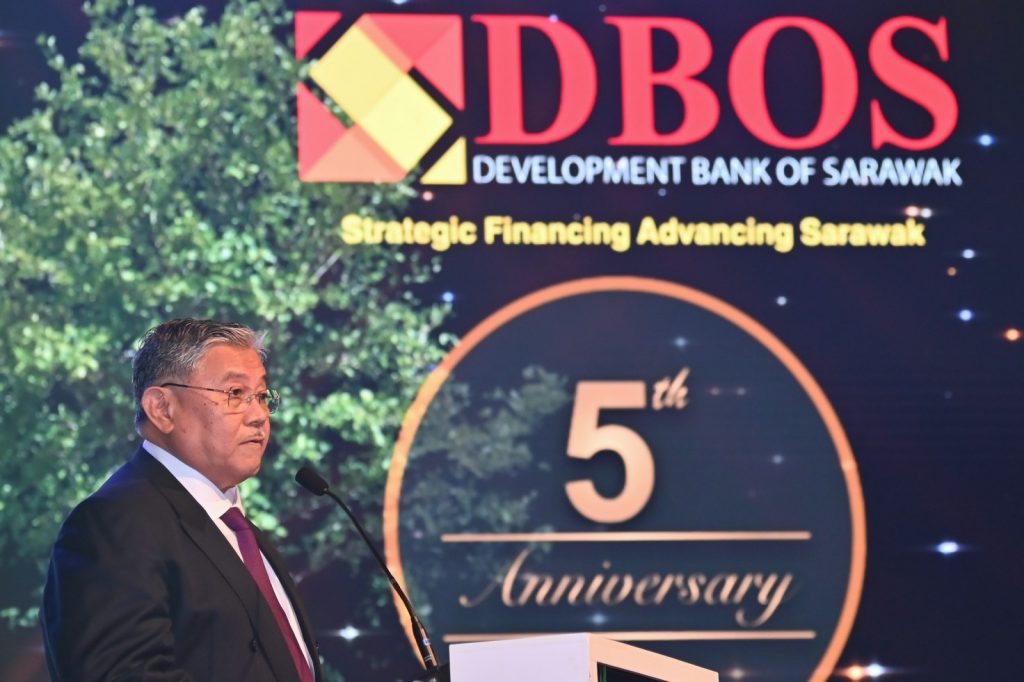
DBOS chairman, Tan Sri Datuk Amar Mohamad Morshidi Abdul Ghani (Photo source: JAPEN)

Launched on 11September 2016, the BBtRF Project is an initiative by SFC as part of the habitat rehabilitation efforts to bring back the rainforest landscape to Piasau Nature Reserve (PNR).

It aims to rehabilitate degraded forest areas in the Nature Reserve through the two components; the enrichment planting and adoption programme.
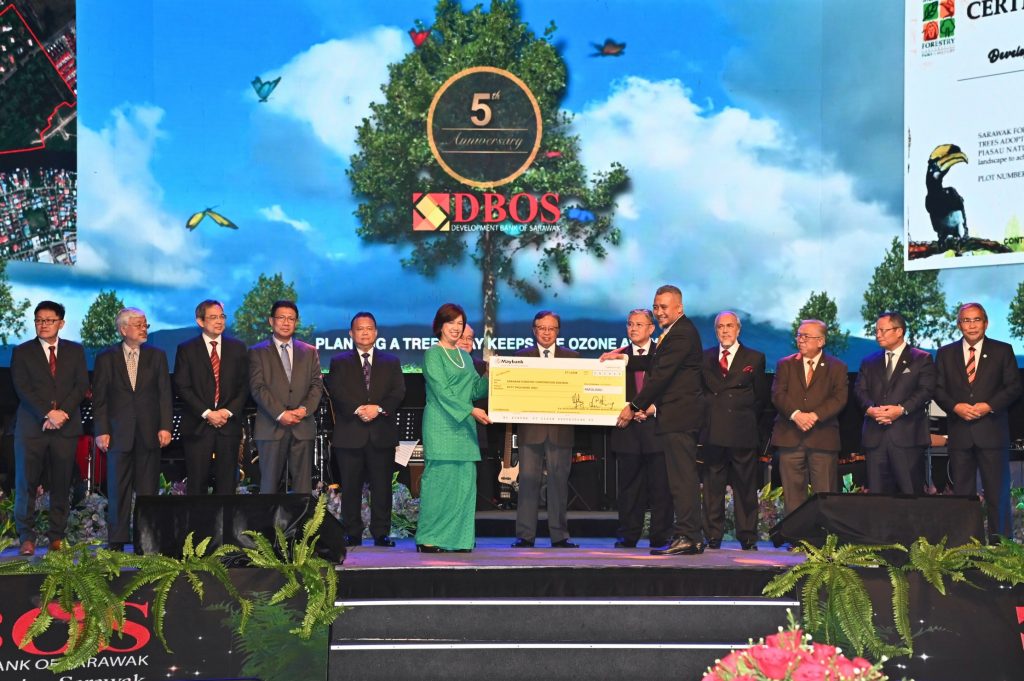
DBOS chief executive officer Datu Laura Lee Ngien Hion (sixth left) presenting the donation of RM50,000 for the ‘Bring Back the Rainforest’ programme to SFC deputy chief executive officer, Abang Arabi Abang Aimran (Photo source: JAPEN)

Under enrichment planting, Various native plant species will be planted at PNR to provide sufficient food sources and a conducive environment for the wildlife residing within the Nature Reserve when the trees grow and start bearing fruits in years to come.

An experimental plot with a total area of 0.22 hectare was initially set up at PNR to identify plant species that could suitably grow on the soils of PNR and the suitable methods to plant them.

Several tree planting activities had been carried out at the Nature Reserve to commemorate the following occasions;

a)     Piasau Nature Reserve’s Earth Breaking Ceremony (May 2014)
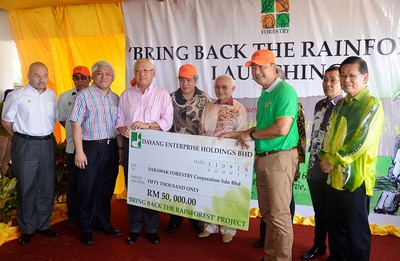
BBtRF was launched on 11th September 2016 (Photo source: SFC)

b)     Sarawak Tourism Board’s Borneo Jazz Festival (May 2015)

c)      Sarawak Tourism Board’s Borneo Jazz Festival (May 2016)

d)     Naim Cendera-Forest Department Sarawak Tree Planting Activity (April 2016)

Under the BBtRF Project, five gardens, namely Piasau Garden, Mixed Species Garden, Fruit Tree Garden, Ficus Garden and Herbal Garden have been established and these gardens are in Zone 2 (Visitors Use) and Zone 3 (High Density Use) based on the zoning specifications described in the Gensler’s Masterplan for Piasau Nature Reserve.

On the other hand, the adoption programme is developed to provide a platform to engage stakeholders which includes the general public, NGOs, learning institutions, government agencies, private companies, and others to participate and contribute in the habitat restoration and wildlife conservation efforts at PNR.

Apart from that, the programme is envisaged to promote awareness on wild life conservation and foster a sense of environmental stewardship amongst adopters.

The desired result of the project is to ultimately;

  • Sufficient food supply and a conducive environment for wildlife species residing in PNR
  • Evolving PNR as a major birding spot in Sarawak
  • Increase in visitors’ arrival to PNR which offers opportunities for visitors to experience rainforest landscape in an urban setting

Piasau Nature Reserve was previously part of the Piasau Camp, an area owned by Sarawak Shell Berhad (SSB).

It was gazetted on 31 December 2013, where demolition works of old buildings were carried out by SSB.

On 17 May 2016, PNR was formally handed over to SFC in a simple handing-over ceremony after all the demolition works had been completed.

Facilities such as trails for cycling and jogging will be gradually developed at the Nature Reserve after the handing-over.

Apart from that, SFC has also outlined nature restoration and recreation development initiatives to further develop PNR.

‘Bring Back the Rainforest’ Project is part of the bigger nature restoration initiative where various native plant species would be planted on the barren areas in PNR.

According to the Department of Statistic Malaysia (2020), Sarawak has the land size area of 12,445,000 ha (124,450 km2).

As part of its restoration initiative, Sarawak is targeting to have 1 million hectares or 8 per cent of Sarawak land to be gazetted under Totally Protected Area (TPA), which includes national parks, nature reserve, wild life sanctuary and marine areas.

As of now, that the balance of area that needed to be gazetted to achieve the 1 million hectare is 1 per cent (127,613.6 hectares).
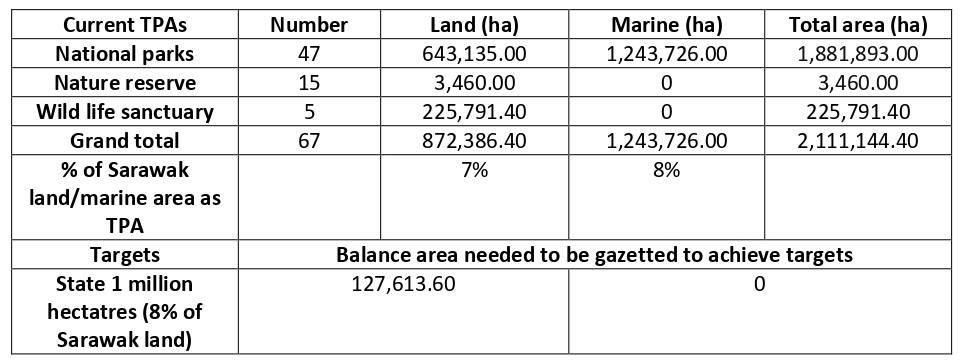
(Source: Sarawak Forestry Corporation)

To know more about BBtRF project, please visit the website https://sarawakforestry.com/bring-back-the-rainforest-project/

Visit here to find out the gazetted TPAs in Sarawak:  https://sarawakforestry.com/layout2/wp-content/uploads/2022/05/Gazetted-TPAs-with-gazzetement-dates-u100522-for-MR.pdf

Latest

A Legacy Worth Weaving, One Thread at a Time

Sarawak's living heritage is at risk as youth grow distant from elders. While government support exists, a community-led model using simple micro-grants and monthly circles can revive traditions. This approach ensures heritage is lived daily, not just archived.

Women Lead Climate Resilience Through WPS Agenda

ASEAN's Women, Peace and Security agenda recognises women as leaders in climate adaptation and disaster risk management. Yet progress remains uneven. Regional plans are strong, but local women still need money, data and decision-making power to build truly safer communities.

Fair Growth Reaches Everyone, Not Just Cities

Fair development means investing in neglected rural areas so people can access basic roads, water, electricity, jobs, land profits, banking, and digital services. It aims to reduce poverty and narrow the city-village gap, while admitting delays and still unfinished work.

Layman Wants Real Answers, Not Viral Delays

Real accountability means complaints trigger binding deadlines, compensation, alerts, and public reports. Until agencies face real penalties and whistleblowers still stay protected, viral outrage will keep replacing ordinary service. The layman wants working systems, not only temporary appeasement after embarrassment.

Newsletter

spot_img

Don't miss

A Legacy Worth Weaving, One Thread at a Time

Sarawak's living heritage is at risk as youth grow distant from elders. While government support exists, a community-led model using simple micro-grants and monthly circles can revive traditions. This approach ensures heritage is lived daily, not just archived.

Women Lead Climate Resilience Through WPS Agenda

ASEAN's Women, Peace and Security agenda recognises women as leaders in climate adaptation and disaster risk management. Yet progress remains uneven. Regional plans are strong, but local women still need money, data and decision-making power to build truly safer communities.

Fair Growth Reaches Everyone, Not Just Cities

Fair development means investing in neglected rural areas so people can access basic roads, water, electricity, jobs, land profits, banking, and digital services. It aims to reduce poverty and narrow the city-village gap, while admitting delays and still unfinished work.

Layman Wants Real Answers, Not Viral Delays

Real accountability means complaints trigger binding deadlines, compensation, alerts, and public reports. Until agencies face real penalties and whistleblowers still stay protected, viral outrage will keep replacing ordinary service. The layman wants working systems, not only temporary appeasement after embarrassment.

Niah’s True Test Starts After the UNESCO Plaque

The UNESCO inscription of Niah is a crucial first step, but the real prize for Sarawak will be economic diversification and community prosperity. Success hinges on translating this global validation into local livelihoods through sustainable tourism and infrastructure that benefits the people of Batu Niah.
spot_imgspot_img

A Legacy Worth Weaving, One Thread at a Time

Sarawak's living heritage is at risk as youth grow distant from elders. While government support exists, a community-led model using simple micro-grants and monthly circles can revive traditions. This approach ensures heritage is lived daily, not just archived.

Women Lead Climate Resilience Through WPS Agenda

ASEAN's Women, Peace and Security agenda recognises women as leaders in climate adaptation and disaster risk management. Yet progress remains uneven. Regional plans are strong, but local women still need money, data and decision-making power to build truly safer communities.

Fair Growth Reaches Everyone, Not Just Cities

Fair development means investing in neglected rural areas so people can access basic roads, water, electricity, jobs, land profits, banking, and digital services. It aims to reduce poverty and narrow the city-village gap, while admitting delays and still unfinished work.

LEAVE A REPLY

Please enter your comment!
Please enter your name here