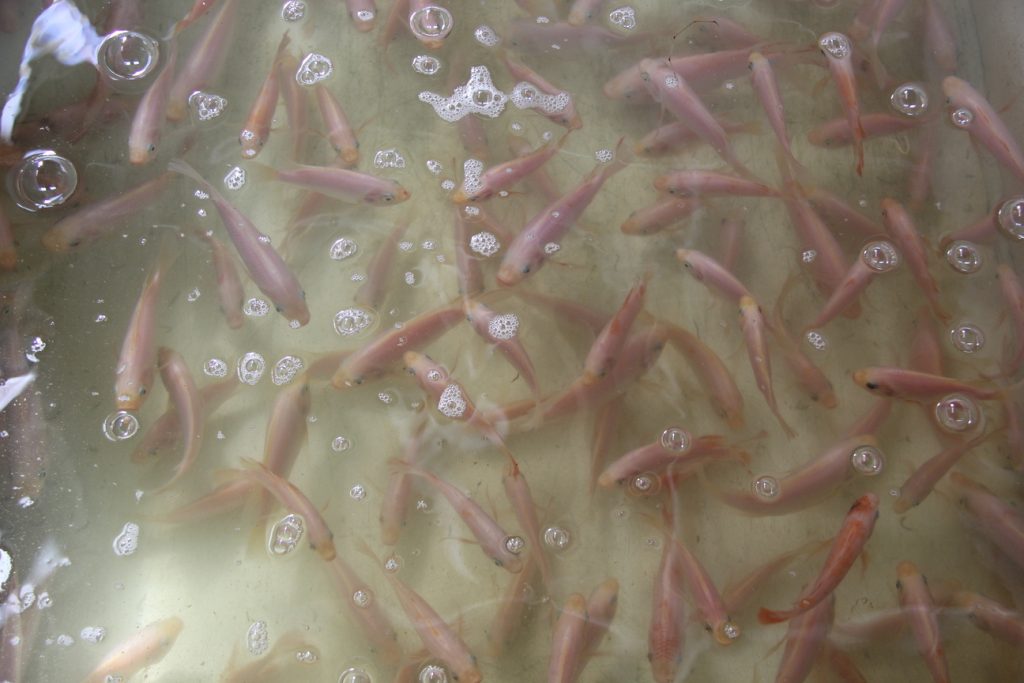
In 2020, Kampung Punang Baru in Lawas is the latest village in Sarawak to be chosen to be under the ‘Desa Lestari’ program to carry out the smoked ‘tahai’ fish processing project.
It is reported that the program will help create 75 new job opportunities and will benefit 500 villagers and its surrounding areas.
Since 2013, the Desa Lestari program is one of the initiatives by the Ministry of Rural Development (KPLB) established under the Government Transformation Program 2.0 (GTP 2.0).

Sarawak is the third highest state in Malaysia to receive the grant assistance under the Desa Lestari program with a total allocation of RM16.53 million has been spent.
Up to 2020, a total of 13 villages in Sarawak have successfully received grants to carry out Desa Lestari projects.
They are:
| No | Village | Sector | Economic project |
| 1 | Kampung Tellian, Mukah (Koperasi Desa Lestari Tellian Tengah dan Ulu Berhad) | Service | Coal truck transportation and sawdust transportation |
| 2 | Kampung Stass, Bau (Koperasi Kaban Stass Bau Berhad) | Agricultural | Canopies and chairs as well as plantation machinery rental services and freshwater fish farming |
| 3 | Kampung Tanjung Parang, Kota Samarahan (Koperasi Desa Lestari Kampung Tanjung Parang Samarahan Berhad) | Services/ Livestock | Agricultural and plantation machinery, canopies and vehicles rental services as well as kelulut beekeeping |
| 4 | Rh Panjang Long Bedian, Baram (Koperasi Jukdian Bersatu Miri Berhad) | Service | Tourism (homestay), transportation and plantation machinery rental services |
| 5 | Kampung Pejuang Kelulit, Miri (Koperasi Pejuang Kelulit Bekenu Miri Berhad) | Service | Plantation machinery renting service |
| 6 | Rh Edmund Kumbong, Saratok (Koperasi Sungai Ruan Berhad) | Service/ Livestock | Plantation machinery renting service, kelulut beekeeping |
| 7 | Rh Surang, Sibu (Koperasi DesaLestari Nanga Tajam Oya Selangau Berhad) | Service | Plantation machinery rental service |
| 8 | Rh Benjamin Angki, Kanowit (Koperasi Homestay Rumah Benjamin Angki Kanowit Berhad) | Tourism | Renting out boats, kayaks and vehicles |
| 9 | Uma Belor, Belaga (Koperasi Uma Belun Leo Dian Berhad) | Agricultural | Businesses weighing, buying and selling oil palm fruit |
| 10 | Rh Benggau, Kapit (Koperasi Desa Lestari MPKK Nanga Sut Balleh Kakit Berhad) | Tourism | Canopy and truck rental services |
| 11 | Rh Jagoi Duyoh, Kuching (Koperasi Jagoi Duyoh Berhad) | Tourism | Eco-tourism |
| 12 | Kampung Punang Baru, Lawas (Tahai Fish Processing Cooperative Kg Punang Baru Lawas Berhad) | Manufacturing | Production of smoked tahai fish |
| 13 | Kampung Mongkos, Serian (Koperasi Mongkos Berhad) | Tourism | Kampung Mongkos Homestay Tourism |
Desa Lestari program background
The Desa Lestari program aims to transform rural areas and improve the living standards of rural communities through various economic activities.
It is implemented through the Community Cooperative in collaboration with the Cooperative Commission of Malaysia (SKM).
As of 2020, a total of 137 villages throughout Malaysia have been selected to be developed under the program with a total location of RM157.4 million.
The implementation period for the Desa Lestari program is seven years and throughout this duration, the program aims to create a socio-economic impact to the rural community by increasing their income, creating job as well as membership within the Head of Household or Ketua Isi Rumah (KIR) in the cooperatives.
From 2013 to 2020, it was reported that a total of gross income of RM53 million has been generated and 4,300 job opportunities created involving a total number of 7,780 KIR members of the cooperatives.
In total, the program has benefitted about 32, 000 people of the rural communities.
Through the Desa Lestari program, it is expected that it will help increase the gross income of the cooperative by at least 5 per cent after one year the program was implemented.
The program is also expected to create at least 10 new employment opportunities for the community involved and to have at least 30 per cent of KIR members participating the cooperative.


Among the requirements for the Desa Lestari program are:
(i) Open to any villages (that has MPKK)
(ii) Nomination is made by the State Government/LKW/SKM
(iii) Has potential and natural resources to be developed
(iv) Has implemented community projects
(v) Must be ready to implement economic projects (Village Profile, Human Capital, Land/Location)
(vi) Competent leadership
(vii) Advantages to villages with existing community cooperatives
Under the Desa Lestari program, the focus is on six main economic sectors, namely:
| No | Sector | Examples |
| 1 | Service | Plantation machinery, tents, boats and vans (vehicles) rental service |
| 2 | Tourism | Agro Tourism and Eco Tourism |
| 3 | Agriculture | Chilli fertigation, pineapple, corn, yellow sugarcane, bean sprouts and mushrooms |
| 4 | Livestock | Kululut bee farming, broiler sea bass, cattle and goat feedlots, tilapia and freshwater lobster |
| 5 | Manufacturing | Rendang maman, handicrafts, yellow noodles, corn products, mineral water, ginger products, smoked tahai fish, bakery products and tongkat biscuits |
| 6 | Retail | Petrol stations, grocery stores and supermarkets, Bario rice sales, food trucks and restaurants |
- Lembaga Kemajuan Wilayah Pulau Pinang (PERDA);
- Lembaga Kemajuan Johor Tenggara (KEJORA);
- Lembaga Kemajuan Kelantan Selatan (KESEDAR);
- Lembaga Kemajuan Terengganu Tengah (KETENGAH); dan
- Lembaga Kemajuan Wilayah Kedah (KEDA)
As of 2020, a total of 12 agencies under KPLB are involved in the Desa Lestari program. They are:
(i) Five (5) Regional Development Authorities under KPLB:
(ii) Agencies under KPLB:
- Majlis Amanah Rakyat (MARA);
- Pihak Berkuasa Kemajuan Pekebun Kecil Perusahaan Getah (RISDA);
- Lembaga Penyatuan dan Pemulihan Tanah Persekutuan (FELCRA);
- Jabatan Kemajuan Orang Asli (JAKOA)
(iii) KPLB Network Agencies:
- Perbadanan Kemajuan Pertanian Negeri Pahang (PKPP);
- Perbadanan Pembangunan Pertanian Negeri Perak (PPPNP);
- Lembaga Kemajuan Tanah Negeri Sabah (LTNS); dan
- Perbadanan Labuan